
Districts Impacted
 Project Summary
The project includes removing the current median crossover on U.S. Route 67 at Hildebrecht Road in Farmington, Missouri and improving the intersection by constructing a J-turn.
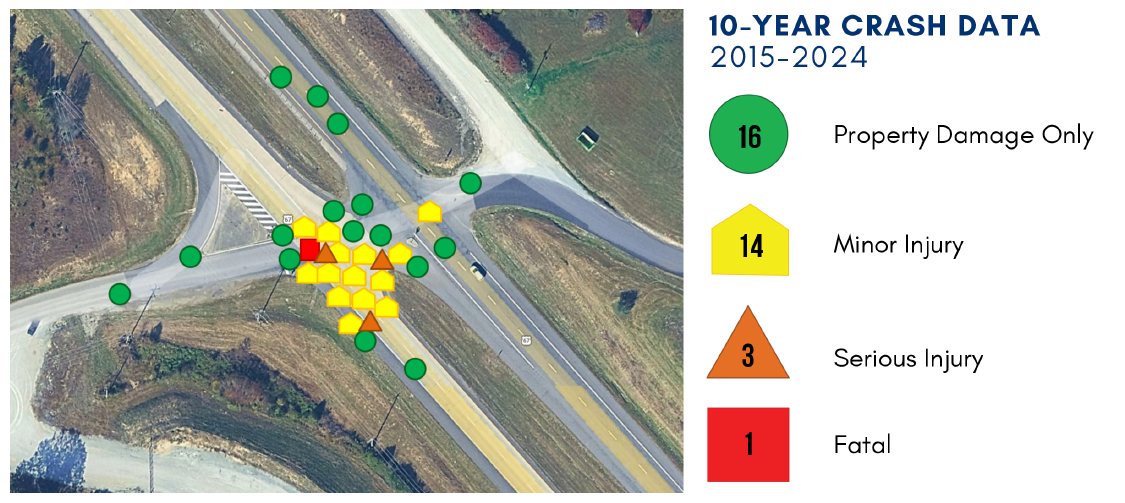
This intersection has been identified for a safety improvement project using historical crash data, specifically examining the types of crashes occurring in this location.
Proximity of J-Turns & Other Considerations
While the proposed Hildebrecht J‑turn is spaced relatively close to the Route H J‑turn, similar configurations have been successfully implemented in other locations across the state.
The project team evaluated several options for improving the crossover at U.S. 67 and Hildebrecht Road. These included installing only the north J‑turn and directing westbound Hildebrecht motorists to use the existing J‑turn at Route H to travel north, or removing the crossing entirely without adding a new J‑turn.
The proposed design provides the best overall value and avoids funneling motorists to Blomeier Road.
Project Timeline

View the Public Meeting Handout
View an aerial of the proposed J-turn at U.S. 67 and Hildebrecht Road in Farmington, Missouri.
How to Drive a J-Turn
The J-turn is an alternative to traditional roadway intersections on a four-lane highway. Instead of motorists crossing fast-moving lanes of traffic to get to the opposing lanes, drivers at a J-turn intersection turn right in the same direction of traffic, merge into the left lane, and then make a U-turn in the direction they intend to travel. Although drivers will have to travel slightly further to get where they want to go, using J-turns can take the same or less time than trying to wait for a safe and appropriate gap to cross traffic.
The point of these turns is to greatly reduce a significant number of severe crashes common when drivers must cross-over busy highways to reach another road.
In the J-turn design drivers turn right in the same direction of traffic, and merge safely into the left lane to prepare to make a left turn in the direction they intended to travel. This option uses an extended deceleration lane, basically adding a third lane on the highway to allow traffic making a left turn onto opposing lanes to safely pull off the mainline, out of the way of high speed traffic.
 Learn More About J-Turns
 U.S. 67/Hildebrecht Road Crash Data
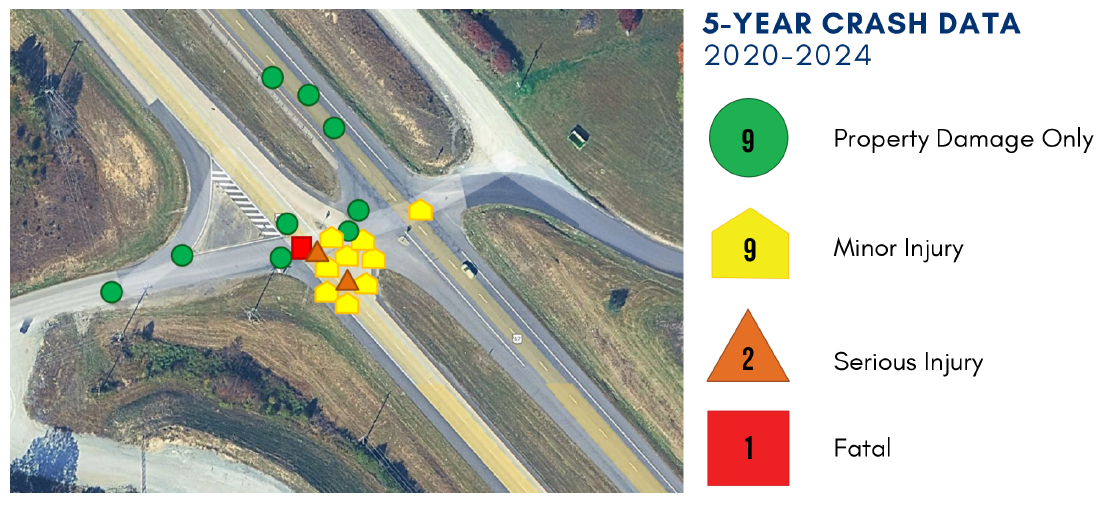
U.S. 67/Hildebrecht Road Crash Data
 How do J-turns enhance safety?
J-turns have proven to be a safer alternative to a traditional roadway intersection on a four-lane highway because they greatly reduce right-angle crashes, also known as T-bone crashes. This crash type is typically the most responsible for fatalities and serious injuries at intersections. In fact, J-turns at similar intersections throughout Missouri and the nation have shown a substantial decrease in fatal and serious injury crashes. Basically, they eliminate the need for motorists to cross the high-speed lanes of traffic to get to the opposing lanes.
Studies done by the National Cooperative Highway Research Program show J-turns provide significant reduction in right-angle, “far” side crashes.
MoDOT has assessed 19 different J-turn intersections in Missouri and collected the following data.

For More Information

Chris Crocker
Title
Project Manager
Department
Southeast District
Contact Info
(573) 380-1658
(573) 380-1658